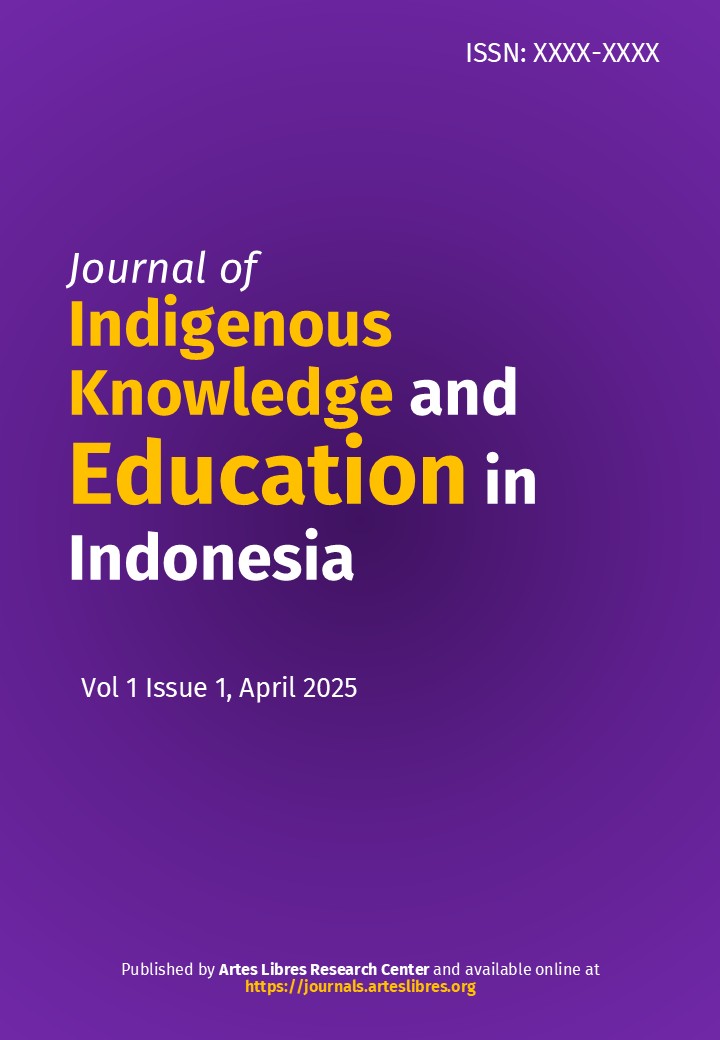
Balinese Spirituality and Education: Fostering Harmony, Sustainability, and Community through Indigenous Learning
Keywords:
Balinese culture, spirituality, education, subak, environmental ethics, community service, sustainability, cultural preservationAbstract
The Balinese people have long embraced spirituality as an integral part of their everyday lives, with a focus on maintaining harmony between humans, nature, and the divine. This paper explores the role of Balinese spirituality in shaping local educational practices, particularly through the teachings of spiritual leaders (pedanda) and temple-based learning. By examining how Balinese children engage in ritual practices, community service, and environmental ethics from a young age, this study highlights the deep connection between education and spirituality. The paper focuses on the significance of the subak (traditional irrigation systems) and temple-based educational practices in transmitting ecological knowledge and fostering sustainable living. Through this lens, the study demonstrates how Balinese spiritual teachings can offer critical insights into sustainability, community-building, and ethical responsibility, suggesting that these practices can serve as valuable models for contemporary education. By examining the intersection of spirituality, education, and sustainability, this paper contributes to the growing discourse on how indigenous cultures can inform and enrich modern environmental education.
Published
How to Cite
Issue
Section
License
Copyright (c) 2026 I Gde Putu Artha

This work is licensed under a Creative Commons Attribution 4.0 International License.
Authors retain full copyright ownership of their works without restriction. The views and opinions expressed in articles published in this journal are solely those of the respective authors and do not necessarily reflect the views of the journal, its editors, publishers, or the authors’ affiliated institutions. All content published in this journal is licensed under the Creative Commons Attribution 4.0 International License (CC BY 4.0).