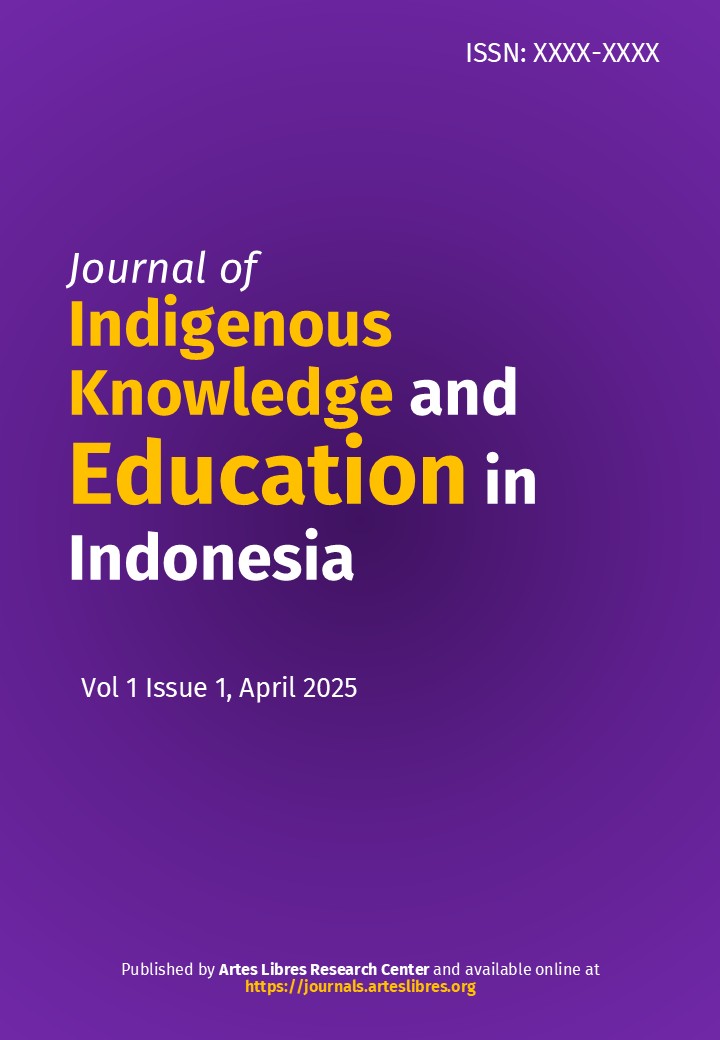
Reviving Dayak Pedagogies: Indigenous Knowledge and Education in the Heart of Borneo
Keywords:
Dayak, indigenous knowledge, experiential learning, environmental sustainability, cultural preservation, Borneo, education reformAbstract
The Dayak people, indigenous to the island of Borneo, have a long tradition of passing down knowledge through oral teachings, rituals, and hands-on practices that connect them to the forest, agriculture, and community life. This paper explores how Dayak pedagogies—centering on experiential learning, environmental knowledge, and community involvement—can be integrated into modern educational frameworks in Indonesia. Focusing on Dayak communities in Central Kalimantan, this study highlights traditional methods of teaching, such as forest-based learning, which emphasize sustainability, respect for nature, and intergenerational knowledge transfer. The paper discusses the challenges of preserving these practices in a rapidly modernizing world where the formal education system often marginalizes local knowledge. It also suggests pathways for integrating Dayak knowledge into school curricula, creating a more inclusive and culturally relevant education system. The contribution of this paper is significant as it sheds light on how indigenous pedagogies not only preserve culture but also offer sustainable solutions for contemporary environmental and educational challenges in Indonesia.
Published
How to Cite
Issue
Section
License
Copyright (c) 2026 Muhammad Ilham, Diana Marzuki, Aditya Kumar

This work is licensed under a Creative Commons Attribution 4.0 International License.
Authors retain full copyright ownership of their works without restriction. The views and opinions expressed in articles published in this journal are solely those of the respective authors and do not necessarily reflect the views of the journal, its editors, publishers, or the authors’ affiliated institutions. All content published in this journal is licensed under the Creative Commons Attribution 4.0 International License (CC BY 4.0).