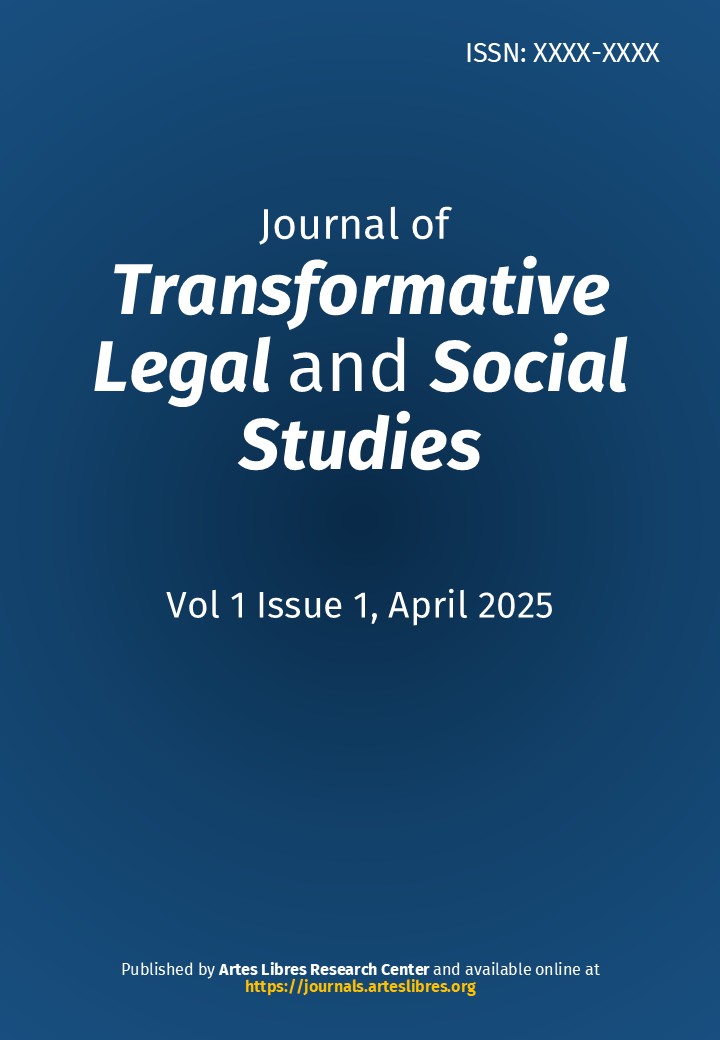
Decolonizing International Human Rights Law: Rethinking Universality from the Global South
DOI:
https://doi.org/10.67912/jtls.v1i1.14Keywords:
Decolonization, international human rights law, legal pluralism, Global South, postcolonial legal theory, universality, epistemic justiceAbstract
International human rights law is often celebrated for its universal principles, yet its doctrinal foundations remain deeply shaped by Eurocentric legal traditions and postcolonial power dynamics. This paper critically examines the colonial genealogy of key human rights instruments and institutions, arguing that the prevailing model of universality often excludes indigenous, communal, and non-Western legal epistemologies. Drawing on case studies from Africa, Southeast Asia, and Latin America, the paper highlights how Global South actors have both resisted and reinterpreted international human rights law to reflect local norms of justice and dignity. The novelty of this research lies in its methodological approach, which integrates postcolonial legal theory, legal pluralism, and comparative constitutional analysis to interrogate the foundational assumptions of universality. Rather than rejecting the human rights project altogether, the paper advocates for a transformative approach that centers legal pluralism and intercultural dialogue. This contribution is timely in the context of growing international debate on the legitimacy, effectiveness, and inclusivity of the human rights system. It offers a critical intervention into global legal discourse by proposing a decolonial framework that affirms both the contextual relevance and global applicability of human rights. The paper concludes by calling for institutional reforms within the United Nations system and a shift toward multi-normative understandings of human rights grounded in historical accountability and epistemic justice.
Downloads
Published
How to Cite
Issue
Section
License
Copyright (c) 2025 Ridwan Arifin, Per Nilsson, Teresa Ruiz, Souad Ezzerouali

This work is licensed under a Creative Commons Attribution 4.0 International License.
Authors retain full copyright ownership of their works without restriction. The views and opinions expressed in articles published in this journal are solely those of the respective authors and do not necessarily reflect the views of the journal, its editors, publishers, or the authors’ affiliated institutions. All content published in this journal is licensed under the Creative Commons Attribution 4.0 International License (CC BY 4.0).